
DIASPORA | The Mask is Off: Second Term Reveals Trump as Wallace's Heir, Nixon's Disciple, Thurmond's Legacy—And Hitler's Understudy
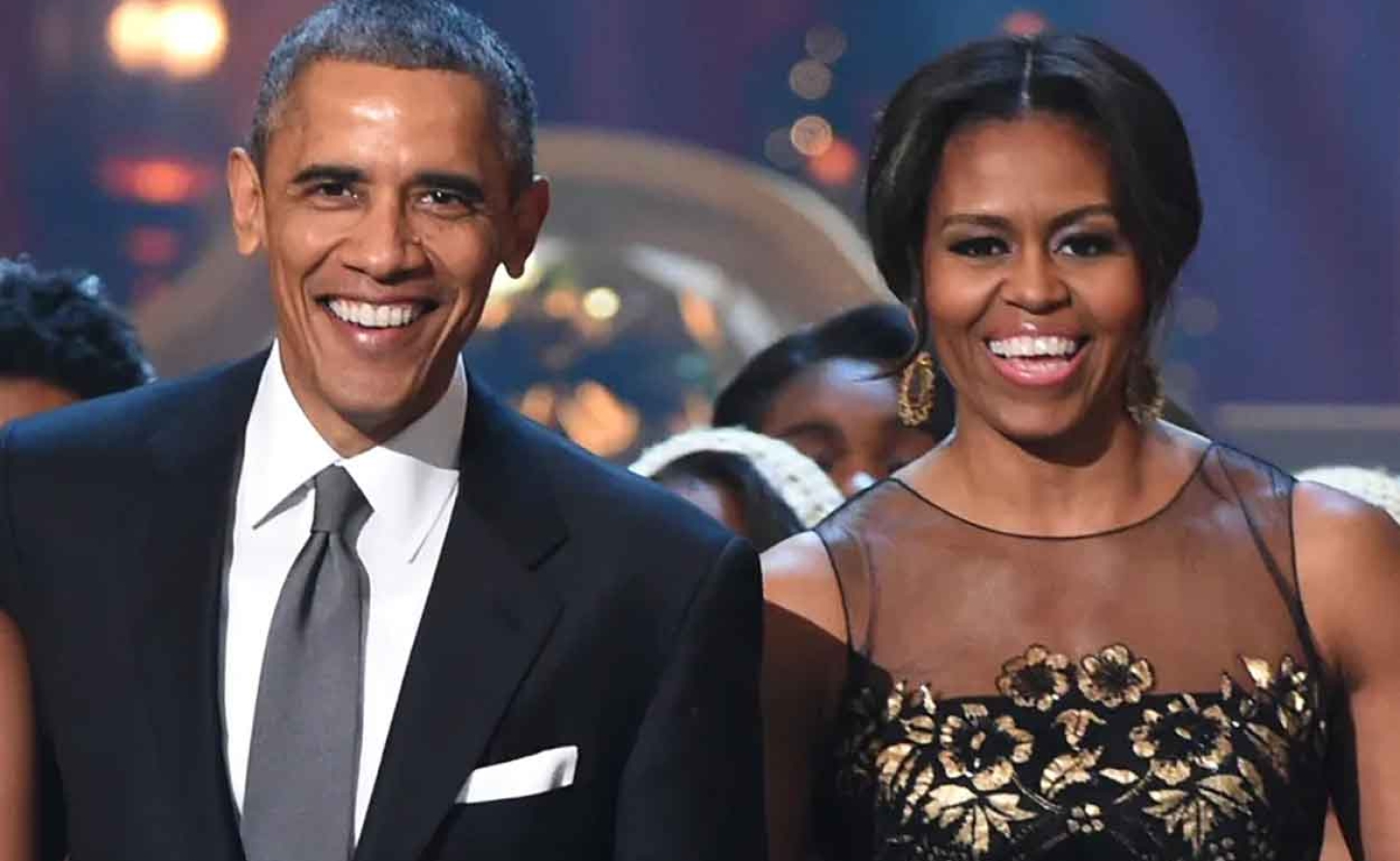
Former United States President Barack and his wife Michelle Obama
A WiredJa Investigation
NEW YORK, NY, February 6, 2026 - On Friday, Donald Trump posted a video to his Truth Social account that depicted Barack and Michelle Obama—America's first Black president and first lady—with their faces superimposed on the bodies of monkeys.

Trump depicting the Obamas on his web site as apes
The White House dismissed it as "fake outrage" over an "internet meme." But for Black and Brown communities across the diaspora, this was no meme.
It was a declaration of intent from a man whose second term has revealed not merely authoritarian tendencies, but an open contempt for people of color that now shapes every lever of American state power.
When asked, he has naturally refused to apologise.
The Warehouse Archipelago
While Trump's defenders clutched their pearls over "overreaction" to monkey imagery, his administration was busy constructing something far more sinister: a sprawling detention infrastructure designed to cage Black and Brown bodies on an industrial scale.
The numbers tell a chilling story. In January 2025, when Trump returned to the White House, approximately 40,000 people sat in immigration detention.
By December, that figure had exploded to 68,400—a 75 percent increase in less than a year, representing the highest detention levels in American history.
This expansion is no accident. Trump's signature "One Big Beautiful Bill Act" allocated a staggering $45 billion specifically for Immigration and Customs Enforcement detention capacity—funding that could triple the system's size within four years.
With this war chest, ICE has embarked on a warehouse-buying spree that would make any real estate developer envious. In January 2026 alone, the agency purchased a warehouse in Maryland for $102 million, another in Pennsylvania for $84 million, and a third outside Phoenix for more than $70 million.
 Trump's push to turn commercial warehouses into ICE detention centers has faced backlash from local residents and elected officials from both parties.
These aren't modest facilities—some are designed to hold up to 8,000 detainees at once, dwarfing America's largest federal prison, which houses approximately 4,000 inmates.
The targets of this carceral expansion read like a geography lesson in global anti-Blackness: Somalis, Haitians, Africans, Caribbeans, Latin Americans.
Trump terminated Temporary Protected Status for Somalis in January, ended family reunification parole processes for Haitians, Cubans, and multiple Central American nations in December, and stripped visa holders of legal status for political speech.
The administration set a daily arrest quota of 3,000 undocumented immigrants and deployed over 35,000 federal troops nationwide to aid ICE operations.
The human cost has been devastating. By December 2025, 32 people had died in ICE detention since Trump took office—more than the 24 deaths across Biden's entire four-year presidency.
The 2025 death toll represents the deadliest year for immigration detention in two decades. These warehouses aren't detention centers; they're death traps masquerading as immigration enforcement.
Operation Metro Surge and Community Terror
The machinery of this racist dragnet operates with brutal efficiency in communities where Black and Brown faces predominate.
In Minneapolis, home to America's largest Somali population, Trump launched "Operation Metro Surge" in December—a campaign of state-sanctioned terror that laid bare his administration's targeting of specific racial and ethnic groups.
Armed ICE agents stormed into East African restaurants in the Cedar-Riverside neighborhood, locked the doors, and demanded identification papers from customers and staff.
They conducted "random" ID checks on the street, pepper-sprayed crowds of witnesses, and descended on senior housing complexes with seven to ten vehicles.
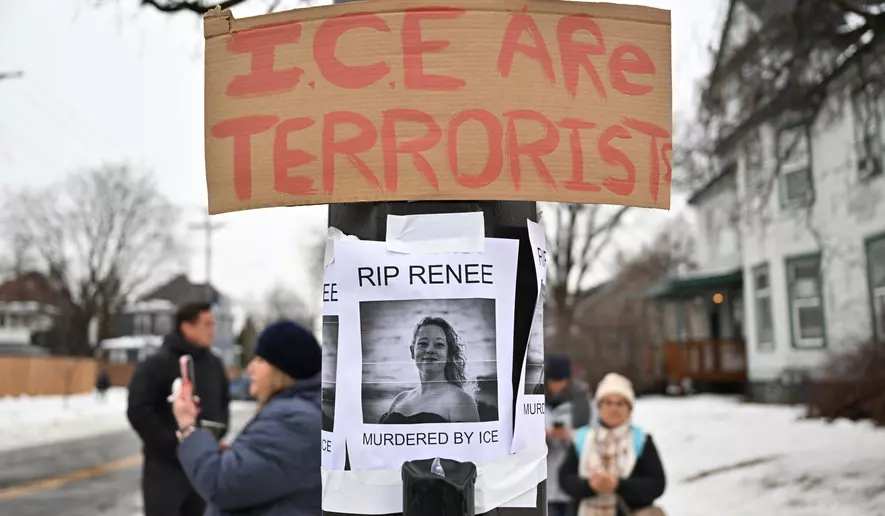 In one incident, agents detained a Somali American U.S. citizen, dragged him to a detention center, fingerprinted him, and then told him to find his own way home—six miles away in snowy weather—after finally checking his passport.
Trump's rhetoric matched the brutality of his enforcement. In a Thanksgiving post where he also used an ableist slur against Minnesota Governor Tim Walz, the president declared that Somali refugees are "completely taking over the once great State of Minnesota."
He claimed, without evidence, that Somalis have "contributed nothing" and are "ripping off our country." The echoes of his previous comments about Haiti and African nations as "shithole countries" and his lies about Haitian immigrants "eating cats and dogs" form a consistent pattern: Black and Brown bodies are, in Trump's America, problems to be contained, warehoused, or expelled.
For Caribbean nationals, the threat is equally acute. Haitians have faced particular targeting, with family reunification programs terminated and Temporary Protected Status under constant threat.
Trump's xenophpbia and racism is so acute, that at the time of writing, he is doubling down his targeting of the latino community and trying to deport a five year old boy, Liam Ramos whose only crime is being born brown and Latino.
A Haitian woman died in ICE detention at Broward Transitional Center in April 2025 amid allegations of medical neglect. Another Haitian migrant, Jean Wilson Brutus, died in detention at New Jersey's Delaney Hall, sparking vigils and renewed outcry over detention center conditions.
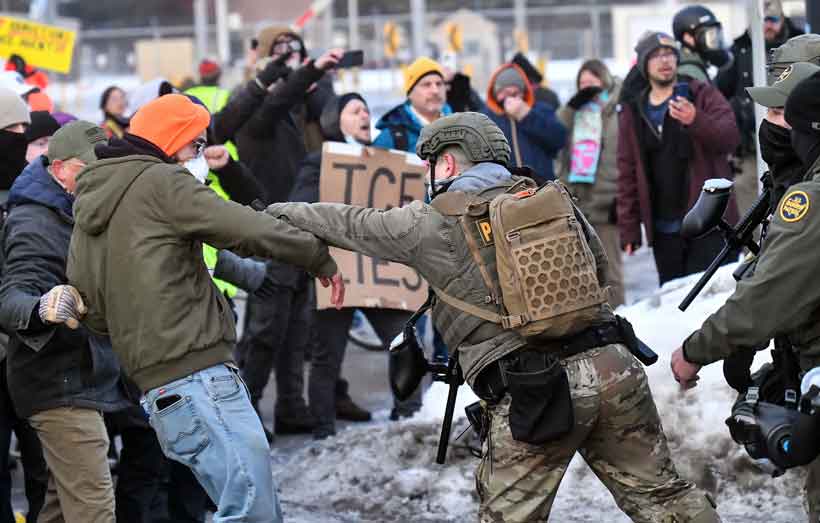 The state-vs.-feds standoff over an ICE killings deepened, though protests have remained peacefulThe Historical Parallel We Cannot Ignore
The state-vs.-feds standoff over an ICE killings deepened, though protests have remained peaceful
At this rate, it would seem that Trump wants to rival Adolf Hitler as the fiercest, most racist, and greatest despot in history—and to have led this transformation from within one of the most progressive and richest countries the world has ever known, the United States of America.
But Trump is not simply mimicking foreign fascism; he is perfecting American racism's ugliest traditions.
He is George Wallace blocking the schoolhouse door, declaring "segregation forever"—except now the barrier is a $45 billion detention archipelago blocking entry to asylum seekers of color.
He is Richard Nixon's Southern Strategy on steroids, weaponizing "law and order" rhetoric to justify armed raids on Somali restaurants and pepper-spraying crowds in Minneapolis.
He is Strom Thurmond's unrepentant segregationist fury, stripped of the genteel veneer of Senate decorum, ranting about "shithole countries" and posting monkey memes with the shamelessness of a man who knows his base craves exactly this degradation.
Trump has taken the racist DNA of Wallace, Nixon, and Thurmond—men who shaped American politics for generations through strategic deployment of white supremacy—and fused it with Hitlerian infrastructure and industrial-scale persecution.
He is America's racist past and despotic future, combined into one malignant presidency.
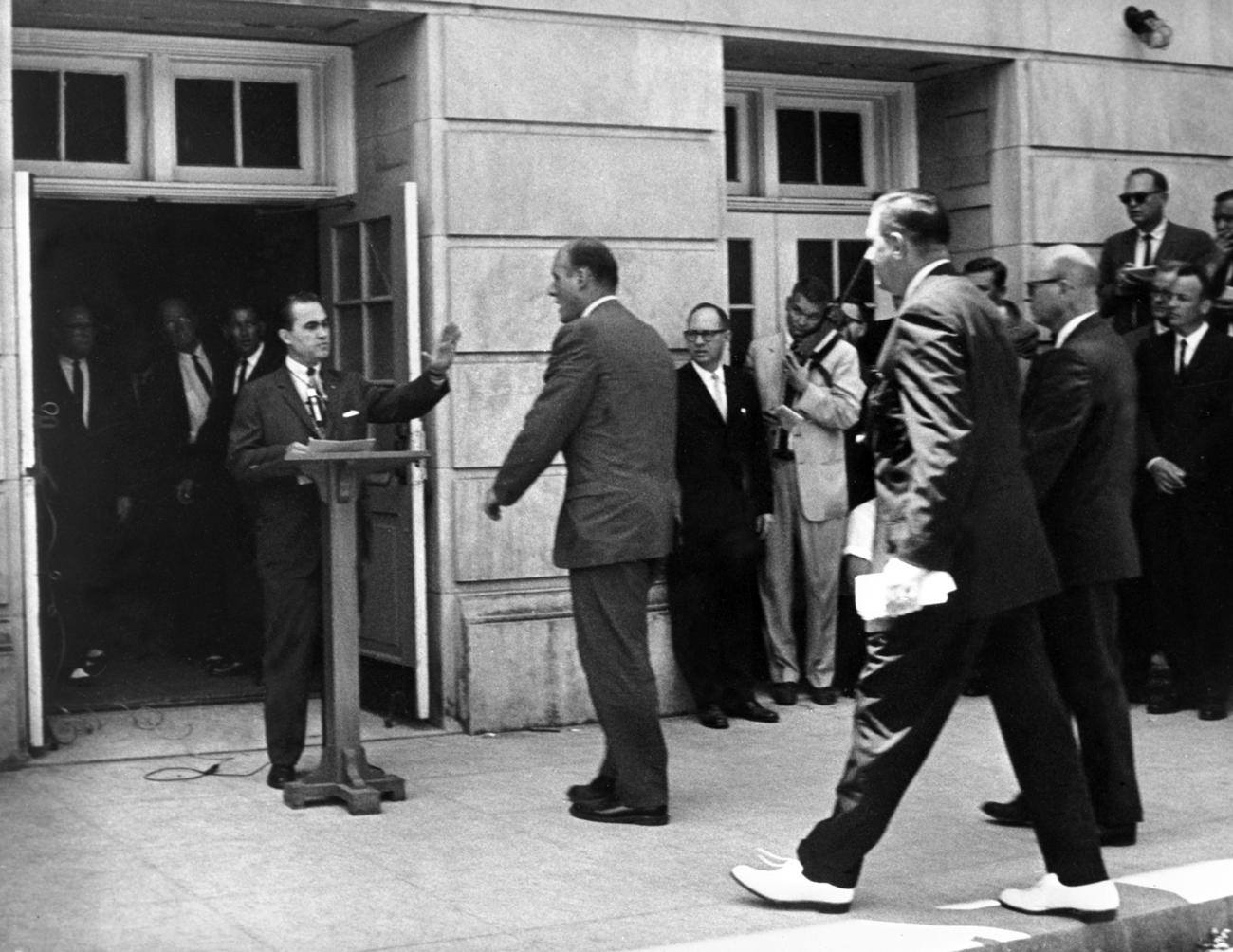
On June 11, 1963, then-Alabama governor George Wallace, who had vowed "segregation forever" at his inauguration, famously stood in the schoolhouse door at University of Alabama, blocking black students from entering.
History teaches us that atrocities don't announce themselves with jackboots and swastikas. They begin with rhetoric that dehumanizes. They continue with laws that marginalize. They accelerate with infrastructure that concentrates.
By the time the world recognizes the pattern, the machinery is already operational and the body count is already mounting.
Trump's thirty-two deaths in detention in a single year, his warehouses designed for eight thousand bodies at a time, his termination of legal protections for hundreds of thousands based solely on national origin—these are not the stumbles of a bumbling autocrat. They are the calculated steps of a man building something monstrous in plain sight.
The tragedy is compounded by the fact that this is unfolding in America—a nation that, for all its profound historical sins, once positioned itself as a beacon of democratic possibility.
That the richest country in human history is channeling its vast resources into caging Black and Brown people in converted warehouses while its president posts images of Black leaders as monkeys reveals a moral collapse of staggering proportions.
This is not merely a betrayal of American ideals; it is an indictment of the very notion that wealth and progress inoculate societies against fascism's seductions.

US President Donald Trump triggered outrage Friday after he posted a video depicting Barack Obama, the first Black president in American history, and his wife Michelle as monkeys.
Beneath it lies the same capacity for racialized violence, the same appetite for despotism, the same willingness to deploy state power against Black and Brown bodies that has characterized European and American imperialism for centuries.
The only difference is that now, the mask has slipped completely, and the world is watching a would-be führer operate with the full backing of American institutional power.
The question is not whether Trump aspires to such infamy. His actions answer that clearly enough.
The question is whether the world—and particularly those of us in the Caribbean who understand intimately what empire does to Black and Brown lives—will recognize the threat early enough to build the resistance it demands.
Caribbean Stakes
For Caribbean nations and diaspora communities, Trump's escalating authoritarianism carries particular weight. We have watched as our Haitian brothers and sisters have been scapegoated and deported.
We have seen temporary protections stripped away with bureaucratic indifference. We know that when America builds cages for Black and Brown bodies, Caribbean people will fill them.
The warehouses rising across the American landscape are not merely immigration infrastructure—they are monuments to a resurgent white supremacy that views our very presence as invasion.
When Trump posts monkeys with Black faces, he is not making a joke. He is telling us exactly what he thinks we are, and exactly what he intends to do about it.
The question for the Caribbean is whether we will hear him clearly, and whether we will respond with regional solidarity and resistance to such open contempt demands.
-30-
