
CARIBBEAN | When the Gulf Burns, the Caribbean Bleeds
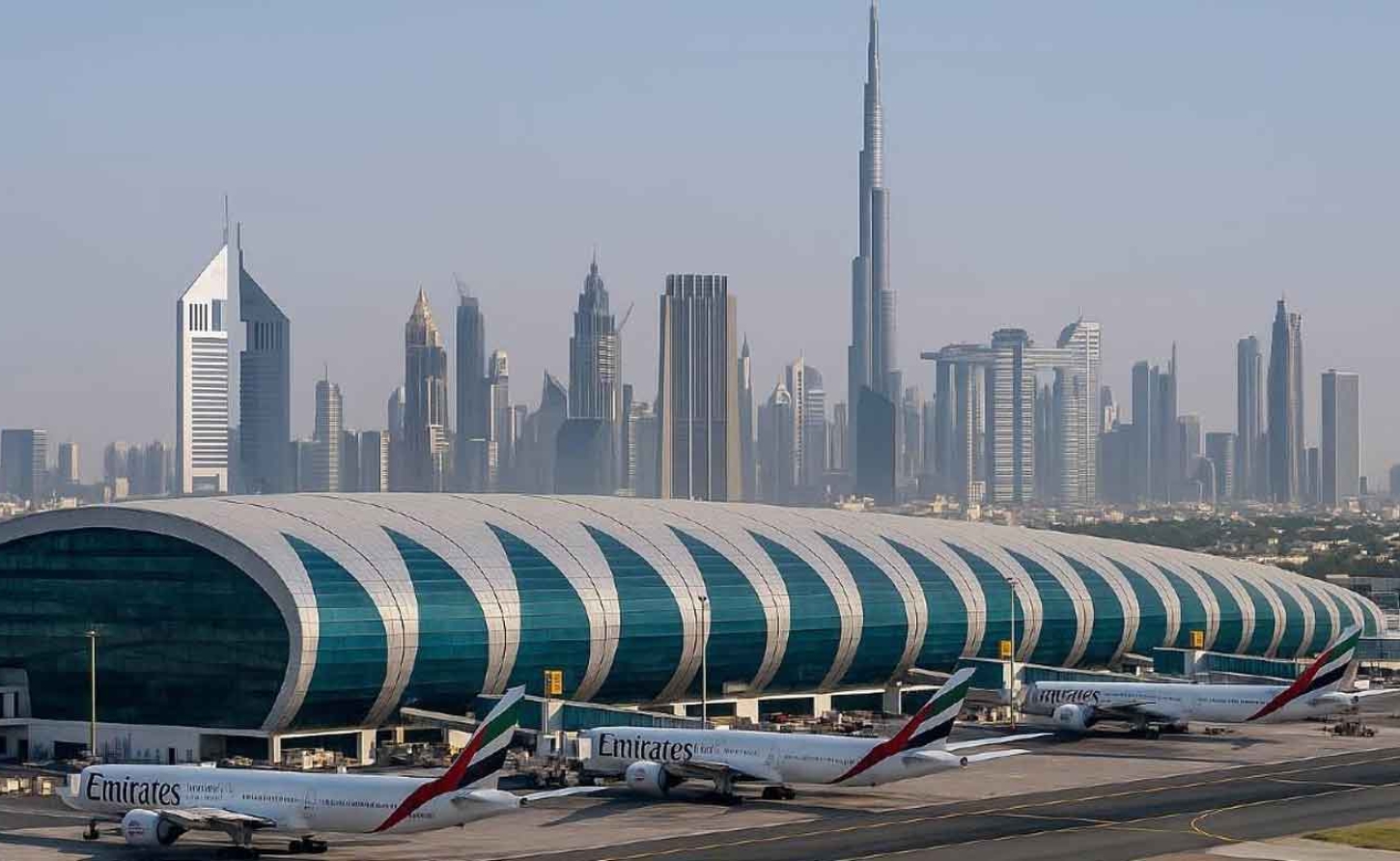
Dubai International Airport, Closede indefinitely as a result of the unprovoked Attack on Iran by the United States and Israel.
Dubai's Shutdown and the Price Small Nations Pay
On the morning of February 28, 2026, the world’s busiest airport went silent. Dubai International — the thundering crossroads that handles nearly 100 million passengers a year, connecting Asia to Europe, Africa to the Americas — shut its doors as Iranian ballistic missiles screamed across Gulf airspace in retaliation for a joint US-Israeli military strike on Tehran.
Both Dubai International and Al Maktoum International were suspended indefinitely. More than 280 flights were cancelled. Another 250 delayed. Emirates grounded. Etihad grounded. Qatar Airways suspended. The Burj Khalifa evacuated. One civilian dead in Abu Dhabi from falling missile debris.
In a single morning, the fulcrum of global aviation cracked.
For most Western media, this is a Middle East story. For the Caribbean, it is something far more personal — and far more dangerous.
The Oil Shock — Caribbean’s Achilles Heel
Even before the smoke cleared over Dubai, Iran had moved to restrict navigation through the Strait of Hormuz — the narrow corridor through which approximately 20 percent of the world’s entire oil supply flows daily.
Ships in the waterway began receiving radio warnings from Iran’s Revolutionary Guard. Oil companies paused shipments. Markets, already rattled by a 19 percent year-to-date price rise driven by war anticipation, braced for the worst. Analysts at Lombard Odier placed a $100-per-barrel Brent crude scenario firmly on the table.
Others went further — Kpler’s senior crude analyst warned that even a single day of Hormuz disruption could push prices to $120–$150 per barrel.
For Europe and North America, a fuel price shock is painful. For the Caribbean, it is potentially catastrophic.
Every CARICOM nation imports the overwhelming majority of its fuel. There are no strategic petroleum reserves, no domestic oil giants to cushion the blow, no sovereign wealth funds absorbing the spike. When oil prices rise, Caribbean governments feel it immediately — in electricity tariffs, in freight costs, in the price of flour, rice and chicken on supermarket shelves.
The cascade is swift and merciless, and it lands hardest on the people who can least afford it.
The timing could not be more cruel. The region is still bleeding from Hurricane Melissa. Tourism workers sit at home without wages while hotels remain shuttered. Families are burning through their savings waiting for a recovery that keeps being pushed further out.
Now, into that open wound, comes an oil shock born of a war the Caribbean had absolutely no hand in starting — and no power to stop.
Aviation & Tourism — The Double Hit
The oil shock is only half the story. The other blow lands directly on the Caribbean’s economic lifeline — tourism.
Dubai International was not merely a destination. It was a connective tissue of global aviation — a hub through which Caribbean travelers routed to Africa, South Asia, the Indian subcontinent and beyond.
With both Dubai airports indefinitely offline and Gulf airspace transformed into a war corridor, airlines across the world are being forced into massive rerouting, burning thousands of additional miles of fuel on every long-haul flight.
That cost does not disappear into thin air. It gets passed on — in fuel surcharges, in higher base fares, in the quiet strangling of affordable international travel.
For a region whose economic survival depends on the ability of tourists to reach its shores cheaply and conveniently, this matters enormously. When transatlantic and intercontinental airfares spike, discretionary travel — the holiday to Barbados, the winter escape to Jamaica, the honeymoon in St. Lucia — is the first casualty.
Tourists do not cancel because they stop loving the Caribbean. They cancel because the arithmetic stops working.
Caribbean tourism was already on a respirator. Hurricane Melissa battered the region’s hotel infrastructure, sending closure timelines stretching from four months to nearly a full year. Workers who remained loyal through the storm now face the prospect of their industry absorbing yet another external shock before it has had a chance to recover.
The hospitality sector, fighting for its survival, now must contend with a global aviation disruption it could not have predicted and cannot control.
The cruel irony is that the Caribbean has spent years positioning itself as a world-class destination — investing in infrastructure, refining its tourism product, building its brand. None of that investment insulates the region from a missile strike in the Persian Gulf.
Trade — The Quiet Casualty
Beyond fuel and tourism lies a quieter, less-reported casualty — the fragile but growing trade relationship between the Caribbean and the Gulf.
Dubai had been emerging as a genuine commercial gateway for Caribbean entrepreneurs and exporters. As recently as November 2025, the African Marketplace Dubai brought together over 200 export-ready brands from Africa and the Caribbean under one roof — fashion, agriculture, wellness, technology — a living demonstration that Caribbean SMEs were serious about building Gulf market access. Those supply chains, those relationships, those hard-won commercial footholds, are now frozen.
For large multinational corporations, a temporary trade disruption is an inconvenience. For a Caribbean small business owner who spent years cultivating a Dubai buyer, who shipped their first container of hot sauces or handcrafted goods or agricultural products through that corridor, the disruption can be terminal.
There are no emergency credit lines, no government bailout packages, no corporate legal teams to manage force majeure clauses. There is only the loss.
The Gulf, through Dubai’s unrivalled logistics infrastructure, had also been serving as a re-export hub — a conduit through which Caribbean goods could reach Asian and African markets that would otherwise be logistically prohibitive. That door has slammed shut, at least for now, and nobody in the Caribbean had a hand in closing it.
The Geopolitical Reality Check
Here is the hardest truth the Caribbean must sit with this weekend: no one in Washington consulted Kingston before ordering those strikes. No one in Tel Aviv weighed Port of Spain’s fuel import bill before launching. The calculations that plunged the Gulf into crisis were made in corridors of power where Caribbean voices do not reach and Caribbean interests do not register.
This is not a new story. It is the oldest story small island states know — that the decisions of superpowers carry a tax, and the bill is always forwarded to those least able to pay it.
But knowing the story does not excuse the region from responding to it. The Dubai crisis has ripped away any remaining illusion that energy dependency and single-corridor trade routes are acceptable long-term strategies for Caribbean survival.
Regional energy security — through renewables, through diversified supply agreements, through genuine CARICOM solidarity on fuel procurement — is no longer a talking point for climate conferences. It is an existential necessity.
Diversified trade routes, reduced dependence on any single global hub, and the financial buffers to absorb external shocks are not luxuries that can be deferred to the next regional summit.
The Gulf is burning. The Caribbean is feeling the heat. And the region’s leaders owe their people more than sympathy — they owe them a strategy.
-30-
WiredJa — Caribbean News for the Caribbean World | wiredja.com
