BARBADOS | The Whitewash Hat-Trick: Mottley's BLP Sweeps All 30 Seats for a Third Consecutive Time
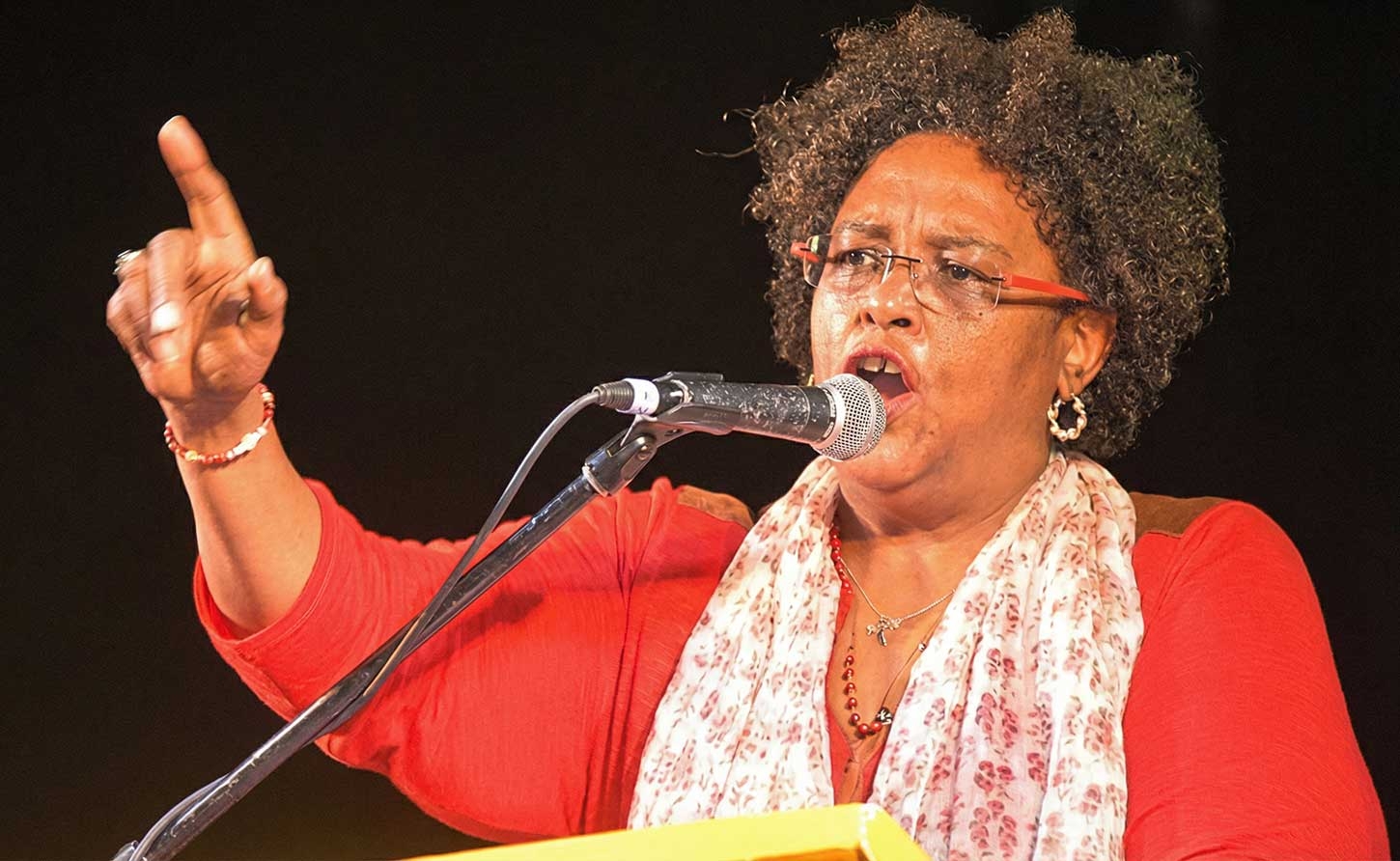
BARBADOS | The Whitewash Hat-Trick: Mottley's BLP Sweeps All 30 Seats for a Third Consecutive Time
Opposition leader Ralph Thorne loses his own seat and was unable to even cast a vote on election day, as Barbados delivers an unprecedented third consecutive clean sweep — and the Prime Minister declares a bank holiday to celebrate
By Calvin G. Brown | WiredJa | February 12, 2026
The result was emphatic, historic, and—for the opposition—utterly devastating. In the early hours of Thursday morning, the Barbados Labour Party completed an unprecedented third consecutive whitewash of the general elections, capturing all 30 seats in the House of Assembly and returning Prime Minister Mia Amor Mottley to power for a historic third term.
Not since the founding of the modern Barbadian state has any political party achieved such sustained electoral dominance: 30-0 in 2018, 30-0 in 2022, and now 30-0 again in 2026.
Mottley wasted no time translating triumph into governance. The Prime Minister announced that Friday, February 13, would be declared a national bank holiday in commemoration of the victory, giving Barbadians a day to celebrate the democratic exercise and the BLP’s mandate renewal.
The new Cabinet is scheduled to be sworn in on Monday, February 16, with the new Parliament set to convene the following Friday, February 20—signalling that Mottley intends to hit the ground running on her third term with no time lost to political theatre.
For the Democratic Labour Party and its leader Ralph Thorne, the night brought a double humiliation. Not only was the DLP shut out of every constituency, but Thorne himself was defeated in St. John, where returning officer Gracia Bolden-Thompson announced incumbent BLP candidate Charles Griffith had retained the seat with 2,327 votes to Thorne’s 1,876, with the New National Party’s Kemar Stuart polling 236.
The man who crossed the floor from the BLP in 2024 to lead the opposition could not even win the seat from which he launched his challenge.
But the cruelest irony was written hours before the count began. Thorne—who had spent the entire campaign warning that the voter list had been compromised—discovered on election day that he himself could not vote. Despite residing in Christ Church East for more than 20 years, he was registered in Christ Church South.
When he arrived at the Sons of God Spiritual Baptist Church at Ealing Grove, his name was nowhere on the register. His wife voted without difficulty at the same location. The opposition leader, silenced by the very system he had accused of failing Barbadians.
Thorne’s voter registration ordeal lends a bitter vindication to his campaign allegations, even as the scale of his defeat undermines any suggestion that irregularities altered the outcome. Throughout the campaign, he had claimed the BLP-led government was interfering with the Electoral and Boundaries Commission’s work and called for a delay.
Mottley responded by inviting CARICOM and Commonwealth observers—a mission led by Antigua and Barbuda’s Ian Hughes had been on the ground since February 5. Whether those observers will address voter registration concerns in their post-election report, regardless of the lopsided result, is a question worth pressing.
Mottley called this election early, dissolving Parliament on January 19 with nearly a year remaining on her constitutional clock. Her justification rested on a formidable economic record: 17 consecutive quarters of growth, record-low unemployment, and foreign reserves at historic highs.
The Republic Child Wealth Fund, promising $5,000 for every child born since Independence Day 2021, anchored a manifesto the Prime Minister insisted was grounded in fiscal discipline and a $148 million surplus.
Yet beneath the macroeconomic shine, familiar Caribbean discontents simmered. Cost of living, crime, and healthcare access dominated voter concerns. Political scientist Peter Wickham noted that many Barbadians felt government policy had failed to touch their daily reality.
Turnout in 2022 was a dismal 44.6 percent. Whether the bank holiday declaration reads as celebration or triumphalism in certain quarters remains an open question.
The fragmentation of the opposition contributed to the rout. Ten political parties fielded 93 candidates for 30 seats, guaranteeing that anti-BLP sentiment was diluted rather than concentrated—a dynamic first-past-the-post punishes with mathematical certainty.
In St. Philip North, the pattern was laid bare: DLP candidate Simon Clarke held an early lead before BLP’s Sonia Browne surged ahead to win, with minor party candidates absorbing enough votes to make the margin decisive.
For the wider Caribbean, this result carries weight beyond Barbados’ coral shores. Mottley has become the region’s most recognisable global voice—championing climate finance reform, steering the Bridgetown Initiative, and being mentioned as a potential UN Secretary-General candidate.
A third mandate cements her as the Caribbean’s preeminent political figure. Her swift move to schedule the cabinet swearing-in for Monday suggests a leader who understands that international credibility requires demonstrable governance continuity.
But the Caribbean should also be asking harder questions. Three consecutive elections producing identical 30-0 results do not reflect a healthy democracy; they reflect a broken opposition ecosystem.
A parliament without opposition is a chamber of echoes where policies go unchallenged and expenditure goes unscrutinised.
The absence of freedom of information legislation, integrity legislation, and campaign financing laws in Barbados—gaps that observers have repeatedly flagged—only deepens this democratic deficit.
Mia Mottley has earned her mandate—that is beyond dispute. But Barbados deserves more than mandates and bank holidays. It deserves the daily parliamentary contest that keeps power honest.
When the new Cabinet takes the oath on Monday and the House reconvenes on Friday with 30 government members and zero opposition for the third consecutive time, the silence on those empty benches should trouble every democrat in the Caribbean.
-30-
