JAMAICA | Is AECOM a Washington Port Audit Security Cooperation — or a China Eviction Notice?
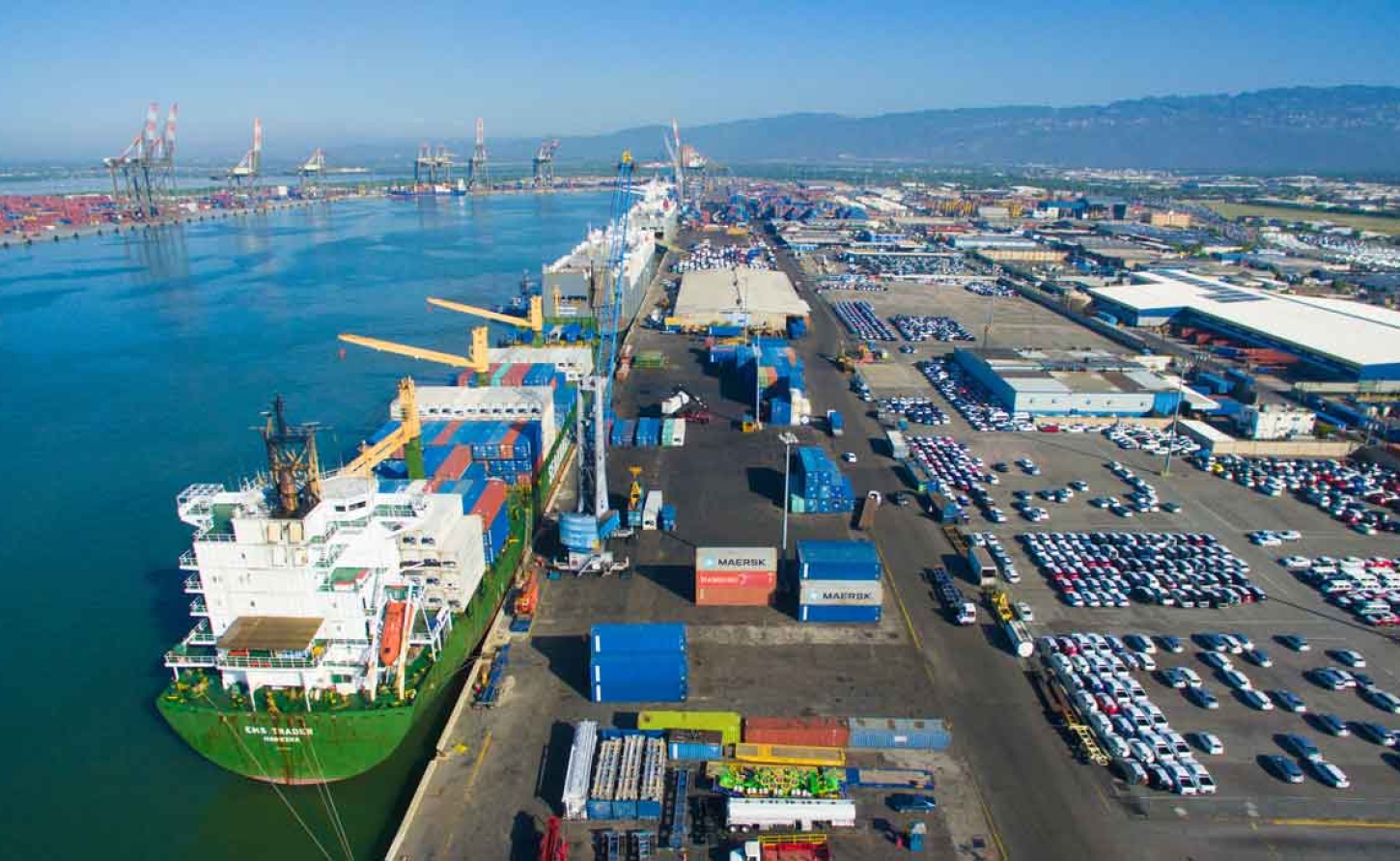
Kingston Wharf, Kingston, Jamaica
Jamaica has cleared the American engineering giant AECOM to survey the security of its three principal commercial ports. On paper, the exercise is routine. The timing, the geography and the contractor’s nationality suggest something larger is being measured.
KINGSTON, Jamaica, June 29, 2026 - The announcement arrived dressed in the grey vocabulary of infrastructure. A comprehensive port security assessment. Three facilities — Kingston, Montego Bay, Ocho Rios. A contractor, AECOM, headquartered in Dallas, with more than half a century of engineering work across the hemisphere. Nothing in the phrasing invites alarm.
But in small states, the most consequential shifts rarely announce themselves loudly. They arrive as technical exercises — a survey here, a feasibility study there — and only later does the strategic shape become visible. The question worth asking is not whether Jamaica’s ports should be secure. Of course they should. It is whose security is served when the firm holding the clipboard answers, ultimately, to interests in Washington.
What is confirmed is narrow. The Government has granted approval for AECOM, a United States company, to conduct a comprehensive security assessment at the island’s three principal commercial port facilities. The contract value, the commissioning agency and the precise terms of reference have not been set out in public detail, and until the underlying documents are tabled, Jamaicans are being asked to take the exercise largely on trust.
The Case for Calm
There is an entirely defensible version of this story, and fairness demands it be told first. Maritime security is not optional. Under the International Ship and Port Facility Security (ISPS) Code — the framework adopted worldwide after the September 11 attacks reshaped global trade — every port engaged in international commerce must rest on a detailed Port Facility Security Assessment.
The Port Authority of Jamaica is the designated national authority for precisely this work, and it has spent recent years tightening its systems through legislation, technology and partnerships. The United States Coast Guard has conducted port-security engagements on the island before — in Kingston, Ocho Rios and Montego Bay — without controversy.
By this reading, hiring a world-class engineering firm to pressure-test the defences of facilities that move the overwhelming majority of the nation’s trade is simply what a serious maritime state does.
That reading is real. It should not be waved away. But it is incomplete.
The Vacuum the Survey Fills
Because the assessment does not happen in a vacuum. It happens at a moment when the United States has openly reframed the Caribbean as contested ground. In June 2025, the Washington think tank CSIS ranked the Port of Kingston the single highest-risk port in its entire Latin American and Caribbean database — not for crime or congestion, but for its perceived exposure to Chinese influence and its perch astride the shipping lanes feeding the Panama Canal and the Mona Passage.
In April 2026, the US State Department announced a first tranche of funding for Caribbean port infrastructure, explicitly tied to deploying American expertise and keeping strategic assets out of rival hands. American strategy documents now speak of a “pivot to the Americas.” Into that climate steps an American firm, to map the vulnerabilities of Jamaica’s most strategic infrastructure.
The China framing deserves precision, because Washington’s version is loose with it. Kingston’s container terminal is operated by the French shipping line CMA CGM under a thirty-year concession secured in 2016; the Chinese exposure that so alarms American analysts runs largely through minority stakes in CMA CGM’s terminal-holding arm, not through direct Beijing control of the quay.
The distinction matters. A threat model built in another capital, for another capital’s purposes, should not be imported into Jamaican policy as though it were neutral fact. Jamaica’s ports are Jamaican concerns first.
When a superpower funds the strategy, frames the threat, and now inspects the defences, the question is no longer whether your ports are secure — but whose definition of “secure” you have agreed to live by.
The Panama Mirror
For a preview of where this logic can lead, look ninety miles further. In Panama, American pressure on the Hong Kong conglomerate CK Hutchison helped force a proposed sale of dozens of global port terminals to a consortium led by the US asset manager BlackRock, a transaction valued at some twenty-three billion dollars.
In January 2026, Panama’s Supreme Court ruled the company’s leases on two canal-side ports unconstitutional and ordered them surrendered. Whatever one makes of the underlying merits, the episode delivered an unambiguous lesson to every small state in the hemisphere: when great-power competition fixes on your infrastructure, the contracts you thought were sovereign decisions can be reopened by forces far beyond your shoreline.
Jamaica’s Own Ledger
Jamaica is not a bystander to this contest; it has banked on both sides of it. The North-South leg of Highway 2000 was built by the China Harbour Engineering Company for some US$458 million, financed by the China Development Bank, in exchange for a fifty-year concession to operate the road and collect its tolls.
Kingston joined China’s Belt and Road Initiative in 2019. These are precisely the ties an American security audit, conducted at this moment, implicitly takes the measure of. An assessment of port “vulnerabilities” is never only about fences and cameras; it is also a reading of who else has access, who supplied the cranes and the scanners, and where the data flows.
Who Holds the Map?
Which brings the matter to its least glamorous and most important core: the data. A comprehensive security assessment produces a map of weaknesses — choke points, surveillance gaps, personnel and access protocols, the soft places in a nation’s critical infrastructure.
That map is itself a strategic asset. If it is generated by a foreign contractor and shared, in whole or in part, with a foreign government, then Jamaica has handed another state an intimate diagram of its own front door.
Cooperation that yields a stronger port is a gain. Cooperation that yields a foreign-held blueprint of national vulnerabilities, with no public guarantee of who ultimately reads it, is something else entirely.
None of this requires believing AECOM’s engineers arrive in bad faith, or that stronger port security is anything but desirable. It requires only the discipline to hold two truths at once: that Jamaica needs secure ports, and that “security” offered by a strategic rival of one’s existing partners is rarely a gift without an account attached.
The protective move is not to refuse the assessment outright. It is to insist that it be Jamaican-commissioned, Jamaican-owned and Jamaican-controlled — that the terms of reference be public, that the resulting data remain on the island, and that no clause quietly converts a security review into leverage over future port partnerships.
The wharves of Kingston have watched empires arrive and depart for three centuries. The task now is to ensure that the next watchman at the gate answers to Jamaica.
— 30 —
